
Ducks and quail, done right
Raising backyard ducks and quail without the guesswork
From hatching tray to egg basket. Guides organized by bird first, then by life stage, with real numbers in Fahrenheit and square feet, so you land on the answer that fits your flock today.
How this site works
Built for keepers who want the number, not the novel
Bird first, then life stage
Pick ducks or quail, then pick where your birds are today: incubating, brooding, growing, laying, or wintering. You get the guide that fits your flock right now, not a 40-chapter book.
At a glance, every time
Every care guide opens with a box of the essentials: temperature in degrees Fahrenheit, square feet per bird, feed type and protein percentage, and the one mistake to avoid. Scan it in ten seconds.
Honest advice, including advice against
We will tell you when something is a bad idea. Impulse ducklings at the farm store in spring, one duck kept alone, too many drakes for the hens. If we would not do it, we say so.
Buy it or build it
Every setup names a cheap DIY option next to the products you can buy. A storage-tote brooder, a kiddie pool, a hardware cloth run. Good care does not require a big budget.
What you get here
Our way of working, in four lines
2 birds
Ducks and quail, each with their own guide track
6 life stages
From hatching eggs through laying and winter care
1 At a glance box
At the top of every care guide, always in US units
5 US regions
In the seasonal calendar, because March in Georgia is not March in Minnesota
Why the brooder temperature matters more than the breed
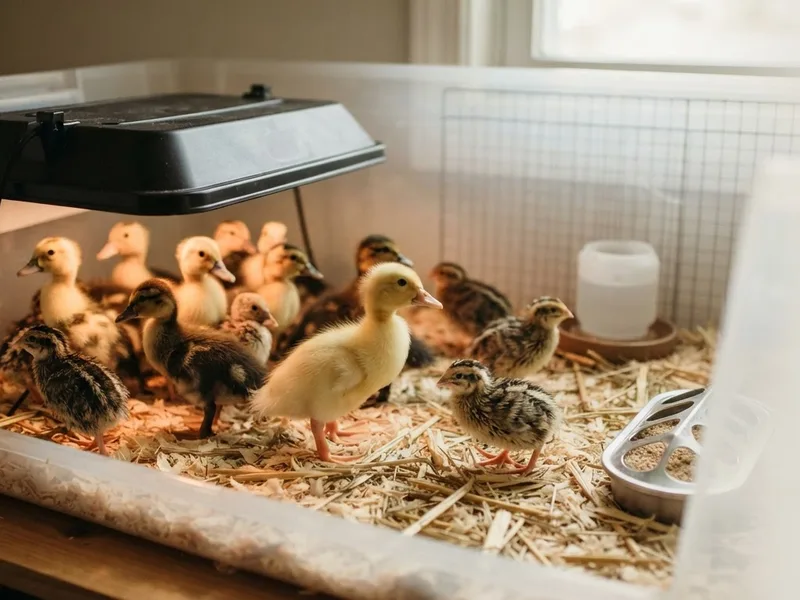
Most first losses in a home flock happen in the first two weeks, and most of them come back to heat. Ducklings need about 90 degrees Fahrenheit in week one, quail chicks about 95, dropping roughly 5 degrees each week until they are feathered out. Too cold and they pile up and chill. Too hot and they pant in the corners.
You do not need fancy equipment to get this right. A plastic storage tote, a heat lamp hung so the birds can move away from it, and a thermometer at bird level will do the job for a few dollars. Watch the birds, not just the dial. A loose ring of contented peeping is what you want.
And a word on swimming, because it comes up every spring: ducklings can splash in shallow, lukewarm water under supervision, but they are not waterproof yet and they chill fast. Short sessions, dry them off, back under the heat.
Who this is for
Find your flock, find your starting point
You brought home ducklings and now what
It happens every spring. The farm store had a bin of ducklings, and now there are three of them peeping in a box in your laundry room. Start with brooder heat, water deep enough to dunk a bill but not to drown in, and a waterfowl-appropriate feed with niacin.
Plan ahead now: ducks grow fast, they are gloriously messy, and they need outdoor housing with real predator proofing within a few weeks. We walk you through it stage by stage.
Same yard, different rules
Ducks are not wet chickens. They need water they can dunk their heads in, they do not roost, they are hardier in cold and wetter in everything. Your coop math changes: plan roughly 4 square feet per duck indoors and more in the run.
Feed is the other trap. Chick starter without added niacin can cause leg problems in fast-growing ducklings, and medicated feed is a topic to check before you scoop. We cover what to buy and what to skip.
Small birds, fast clocks
Coturnix quail are the quickest route to homegrown eggs in the US: about 17 to 18 days of incubation, and hens can start laying around 6 to 8 weeks old. They need little space, roughly 1 square foot per bird in a well-built hutch.
They are also fragile as chicks and excellent at flying straight up. Brooder heat at about 95 degrees Fahrenheit in week one, a lid on everything, and game bird feed with the higher protein they need. Our quail track starts at hatching eggs and goes from there.
Hatching eggs with kids, without chaos
A supervised hatching project is one of the best ways to teach kids where food comes from. It is also a project with a calendar: set eggs, candle around day 7 to check development, then lockdown, the final days when the incubator stays closed and humidity goes up.
Have a plan for the birds before you set a single egg, including the males. We help you pick a species, set the dates, and talk honestly about what happens after hatch day.
Getting started
Your first month with new birds, in order
Set up before you buy
Brooder first, birds second. Heat source, thermometer, bedding, feeder, and waterer all running a day early so temperatures are stable when the birds arrive.
Dial in heat and feed
About 90 degrees Fahrenheit for ducklings and 95 for quail chicks in week one, dropping roughly 5 degrees per week. Match the feed to the bird: waterfowl feed with niacin for ducks, higher-protein game bird feed for quail.
Grow them out
Add space as they feather out, keep bedding dry enough to prevent bumblefoot, those infected sores on the foot pad, and start planning outdoor housing before they outgrow the tote.
Move outside with predator proofing
Hardware cloth, not chicken wire, with latches a raccoon cannot open. A kiddie pool for the ducks, secure low housing for quail, and a locked door every single night.
Settle into the egg routine
Most duck breeds lay by roughly 5 to 7 months, Coturnix hens as early as 6 to 8 weeks. Collect daily, adjust feed for layers, and check our regional calendar for seasonal tweaks.
Questions we hear over the fence
Can I keep just one duck?
No, and we say that plainly. Ducks are flock animals and a lone duck is a stressed, noisy, unhappy duck. Start with at least two, and three is better so nobody is left alone if you lose one.
How many drakes should I keep?
Fewer than you think. A drake is a male duck, and too many of them means overbred, harassed hens. A common backyard ratio is about one drake for every 4 to 6 hens, and zero drakes is fine if you only want eggs.
Do ducklings need a pond?
No. They need water deep enough to rinse their bills and nostrils, and supervised splashing is fine, but full swims can wait until they feather out. Adult ducks are happy with a kiddie pool changed regularly.
How long until I get eggs?
Coturnix quail are the fast option, often laying by 6 to 8 weeks old. Most ducks start around 5 to 7 months depending on breed and season. A spring duckling often starts laying the following spring.
Are backyard ducks or quail legal where I live?
It depends entirely on your city, county, and HOA. Rules on poultry numbers, setbacks, and males vary block by block. Call city hall or check your municipal code before you buy birds, and ask your HOA if you have one. We can tell you what to ask, not what your town allows.
What is angel wing and how do I avoid it?
Angel wing is a condition where the wing tip twists outward in growing ducks and geese, usually linked to too much protein or calories too fast. Feed an appropriate waterfowl ration, skip the bread, and act early if you see a wing start to droop. A vet can help you wrap it while the bird is still growing.
Tell us about your flock
Stuck on brooder heat, drake ratios, or whether your town even allows ducks? Send us a note with your birds, your setup, and your question. We will point you to the right guide or help you sort the next step.